This study discussed the role on estrogen on preventing neurodegeneration. This important function of estrogen is one of the reasons I warn men not to lower estradiol too much: we need it for healthy
brain function and to protect against neurological degeneration. Yes, excess estradiol may increase breast tissue size,
cause water retention, moodiness and erectile dysfunction and some men need to
lower it while on testosterone replacement therapy with aromatase inhibitors.
But overdosing these agents can wipe one's
estradiol. Bone density
loss, worse hair and skin health, and cognitive issues may appear the. So, be
conservative and retest a month after starting anastrazole or tamoxifen (two of the several aromatase
inhibitors available). Adjust dose so that estradiol is not under 15-20
pg/dL or over 35 pg/dL. Some men only
require 0.5 mg of anastrazole 2-3 times a week after induction therapy of 1 mg
per day for 3 days. However, no optimum
dosing protocol has been studied in men on testosterone who experience large
estradiol increases on therapy.

Showing posts with label anastrazole. Show all posts
Showing posts with label anastrazole. Show all posts
Monday, June 18, 2012
Thursday, May 17, 2012
TESTOSTERONE STUDY IN OLDER MEN STOPPED EARLY DUE WITH GREATER HEART RISK
A placebo controlled
study using a 1 percent testosterone gel (Testim) in 700 older men
(aged 65 and older) was stopped early due a higher incidence of cardiovascular events
in the testosterone arm.
These findings contradict
those from a previously published study
performed in 2,416 men that reported that a 30% reduction in cardiovascular events
occurred in men with higher blood levels of testosterone.
The halted study associated
the higher incidence of events with higher total and free testosterone and
higher estradiol blood levels. The study does not provide relative risk
differences between testosterone and estradiol levels, so it is not known which
factor has the highest impact on cardiovascular risks.
Testosterone converts into
estradiol, a female hormone, via aromatization in the liver and other tissues. Previous
studies have shown that men with even slightly elevated estrogen levels doubled
their risk of stroke and had far higher incidences of coronary artery disease. High
estradiol can also cause enlargement of breast tissue, water retention and
possibly erectile dysfunction in men. However,
men with low estradiol are more prone to osteoporosis and cognitive loss, so a
good balance of this hormone is important for a man’s health.
Nelson Vergel, author of the
best-selling book Testosterone:
A Man’s Guide, said “ I am glad that the study authors suggest that a similar study
needs to be performed by providing not only testosterone supplementation but
also an aromatase inhibitor to assess if any decrease in cardiovascular events
is seen by decreasing testosterone conversion into estradiol. Reducing
aromatase conversion of testosterone into estradiol also frees up more
testosterone to do its job”.
The most popular aromatase
inhibitor used in men is anastrazole (brand name: Arimidex), which is dosed in
small oral doses 3 times a week. But a mixture of testosterone plus anastrazole
cream has recently entered the market.
“We are the only pharmacy that provides by
prescription a testosterone cream that has been formulated with anastrazole for
both products to be absorbed through the skin”,
said Jaime Rios, co-owner of APS Pharmacy , a
specialty pharmacy that ships economical hormone products nationwide. "This
cream makes it easy for men to control their estradiol without having to
remember to take an oral medication", added Rios.
More men’s clinics are
taking notice of balancing estradiol in men using testosterone. One of them is Defy Medical . “We
monitor estradiol closely in men served by our clinic and provide treatment
solutions that are affordable to any man”, said Jasen Bruce, clinic manager for
Defy." We also provide the most economical testosterone and estradiol
blood test to any man who wishes to have these hormones tested", added
Bruce.


Wednesday, May 16, 2012
How to Stop Testosterone Safely and Possibly Reset Your Hormonal Axis
From the book: Testosterone: A Man's Guide (click here)
Some men need to stop using testosterone or other androgens because side effects are a problem (e.g. low sperm count interferes with their goal to have children). Most physicians advise the patient to just stop testosterone without thinking about the possible consequences of the hypogonadal state after treatment cessation. Will the patient be worse off than when he started?
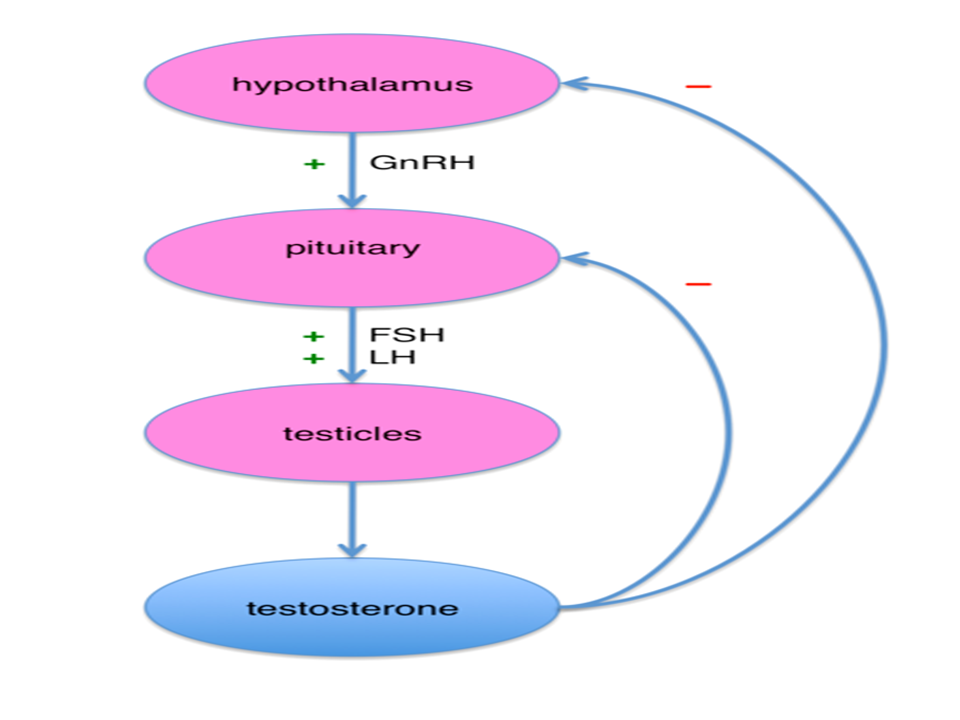
Testosterone replacement therapy and anabolic steroids can lead to HPTA (Hypothalamic-Pituitary-Testicular Axis- shown in figure below) dysfunction. Supplemental testosterone
can
inhibit the release
of
the body’s own testosterone production through negative feedback inhibition
on LH levels. This feedback
inhibition also results in suppression of FSH levels, leading
to suppression of sperm production (spermatogenesis).
Not all studies show a shutdown
of the HPTA in patients after testosterone cessation. In a study previously mentioned in the Moodiness
section, Dr. Rabkin compiled data for 42 patients
who were treated with
testosterone for 12 weeks and then randomized (double blind) to receive placebo injections for six weeks.
At week 13 (one week after their first
placebo injection and three weeks since the last active injection), mean testosterone level was 286 ng/dL. At week 15 (after 2 placebo injections), mean testosterone level was 301, and after week 17 (after 3 placebo injections), mean serum level was 324 ng/dL.
None of these values was statistically different from the mean baseline testosterone level of 308 ng/dL. These data suggest that for men who were already hypogonadal there was no further
decline in the body’s production of testosterone once testosterone therapy was discontinued after 12 weeks
of use. It is not known if longer term testosterone use would have the same results.
When high-dose
testosterone use (as in bodybuilding) is discontinued the HPTA
dysfunction that occurs when it is stopped
may be a lot more pronounced. Stopping treatment
may cause the patient to suffer all the symptoms of hypogonadism for weeks or months. Many lose a lot of the muscle mass they gained through their cycle of anabolics plus testosterone.
In some cases a specific medical protocol
is required for HPTA normalization. If you go to bodybuilding sites,
you will see Clomid and HCG
mentioned a lot for this purpose.
There is no controlled data from studies using any protocols to accelerate
the normalization of normal
testosterone production in men who have used either supplemented
physiologic (normal) or supraphysiologic (above
normal) doses of testosterone for
long periods.
For men who had normal testosterone before starting testosterone
or anabolic steroids (athletes, bodybuilders or certain people with wasting syndrome) and who want or need to stop those compounds, some physicians have attempted to jump-start testicular testosterone
production using a combination of products that have different effects on the HPTA and
estrogen receptors. One such physician
is Dr. Michael
Scally from Houston (read the interview with him: Click here ) who presented a poster at the
Lipodystrophy and Adverse Reactions in HIV conference
in San Diego in 2002 that reported
the use of a protocol
to normalize testosterone production
in HIV-positive
patients after prolonged
anabolic steroid and testosterone use for their wasting
syndrome.
The protocol
consisted of the use of HCG, clomiphene citrate, and tamoxifen (read about
each of these products
in their respective sections). Treatment
takes place over two discrete intervals. The first treatment
interval is to initiate the restoration of gonadal function.
The second interval
is to restore the hormonal pathways
among the hypothalamus, the pituitary and the
gonads. The medications are initiated simultaneously after cessation of androgens when it is expected that the body would try to start to slowly make its own testosterone. If the testosterone
ester (cypionate, enanthate,
undecanoate, Sustanon) that the patient used is known (the most common one in the United States is depo testosterone or testosterone cypionate), its half-life in the
body can be estimated
so that the
date to begin the
medical protocol can be predicted
with some accuracy to assess a time when no
pharmaceutical testosterone remains
in the body.
The protocol for HPTA normalization contains:
First 15
days:
HCG 2,500 IU (subcutaneous) once every other day;
Clomiphene citrate 50 mg orally twice a day; and
Tamoxifen 20 mg orally once a day.
A satisfactory testosterone level on day 15, typically 350 ng/mL or greater, is followed by the oral medications (no HCG) for an additional
15 days.
This protocol
has not been tested in many
patients but has shown good results in restoring HPTA in a month.
I know that this sounds like a long time but without treatment
the body’s restoration process
would take about the same length of time that somebody was using androgens. In some, HPGA function and testosterone production never returns to normal. Hopefully we will see data on approaches
like this one used in patients
who need to stop testosterone or anabolics after long term use. However,
no such studies are listed
in clinicaltrials.gov.
Most doctors
will refuse to prescribe
the protocol above since they are not familiar with it. But remember
that this protocol will likely not help most
men who had low testosterone before starting TRT anyway.
It is more
likely to be helpful to those who used testosterone and anabolics for muscle building purposes and who were not hypogonadal before starting their muscle building cycles.
More information
More information
Subscribe to:
Posts (Atom)
Register in our new forum site


