Search This Blog

Translate

Friday, May 18, 2012

Overview of Testosterone Clinical Trials


Testosterone and its effects on sexual function

1.  A long–term prospective study of the physiologic and behavioral effects of hormone replacement in untreated hypogonadal men – A.S. Burris et al. Journal of Andrology
1992; 13(4):297–304.

Men with low levels of testosterone who had not yet been treated with supplemental hormone showed significantly higher levels of depression, anger, fatigue and confusion than did men with acceptable testosterone levels. During testosterone replacement therapy, scores improved. Also during treatment, these men reported increased sexual interest and greater numbers of spontaneous erections. (Design of Study: Hypogonadal men before and during testosterone treatment compared to untreated normal men and untreated infertile men; no placebo treated controls.)


Journal of Clinical Endocrinology and Metabolism 1979; 48(6):955–958.

The study found that the effect of testosterone replacement on sexual activity in hypogonadal men is rapid, reliable, and not due to placebo effect. To maintain testosterone levels and adequate sexual function, testosterone replacement should be administered on an ongoing basis. (Design of Study: Hypogonadal men during double blind, randomized, cross-over treatment with sub-replacement and replacement doses of testosterone; no placebo treated controls.)

3.  Improvement of sexual function in testosterone deficient men treated for one year with a permeation enhanced testosterone transdermal system – S. Arver et al. Journal of Urology, 1996; 155(5): 1604-1608.

This study observed that nocturnal erections occurred more frequently with longer duration and greater rigidity, and patient assessments of sexual desire and weekly number of erections were higher in hypogonadal men when testosterone levels were normalized, as compared with measurements occurring during testosterone withdrawal. (Design of Study: Hypogonadal men during open-label testosterone treatment; not a controlled study.)

4.  Androgen Replacement: Sexual Behavior, Affect and Cognition – A.W. Meikle, editor.
Hormone Replacement, Contemporary Endocrinology. Humana Press, Totowa, NJ (in press).

This chapter reviews studies that evaluate the effects of testosterone replacement on erectile function in hypogonadal males. (A review article; not a controlled study.)


Testosterone and its effects on mood and thinking

1.  A long–term prospective study of the physiologic and behavioral effects of hormone replacement in untreated hypogonadal men – A.S. Burris et al. Journal of Andrology
1992; 13(4):297–304.

Men with low levels of testosterone who had not yet been treated with supplemental hormone showed significantly higher levels of depression, anger, fatigue, and confusion than did men with acceptable testosterone levels. During testosterone replacement therapy, scores for the previously untreated hypogonadal men improved indicative of less depression, anger, fatigue, and confusion. (Design of Study: Hypogonadal men before and during testosterone treatment compared to untreated normal men and untreated infertile men; no placebo treated controls.)

2.  Androgen–behavior correlations in hypogonadal men and eugonadal men. II.
Cognitive abilities – G.M. Alexander et al. Hormones and Behavior 1998; 33(2):85–
94.

Reasoning abilities were assessed in 33 men with low levels of testosterone who
were receiving supplemental testosterone, 10 men with normal levels of testosterone


men with normal testosterone levels who did not receive supplemental testosterone. Prior to and after being given testosterone the men completed tests that measured visual–spatial ability, verbal fluency, perceptual speed, and verbal memory. Men with low testosterone seemed to have lower levels of verbal fluency; these improved following treatment with testosterone. These data suggest that testosterone may play some role in influencing some aspects of reasoning and thinking. (Design of Study: Hypogonadal men before and during testosterone replacement treatment compared to normal men before and during high dose testosterone and untreated normal men; no placebo-treated controls.)

3.  Testosterone replacement therapy improves mood in hypogonadal men – a clinical research center study – C. Wang et al. Journal of Clinical Endocrinology and Metabolism 1996; 81(10):3578–3583.

The study evaluated changes in mood for 60 days in 51 hypogonadal men. Researchers found that testosterone replacement therapy in hypogonadal men improved their positive mood parameters including energy, well/good feelings, and friendliness. Testosterone replacement also decreased negative mood parameters including anger, nervousness, and irritability.
(Design of Study: Hypogonadal men before and during testosterone treatment with a variety of testosterone formulations; not a controlled study.)


Testosterone and its effects on body composition and bone density

1.  Effects of testosterone replacement on muscle mass and muscle protein synthesis in hypogonadal men: a clinical research center study – I.G. Brodsky et al. Journal of Clinical Endocrinology and Metabolism 1996; 81(10):3469–3475.

Researchers measured body composition and muscle protein synthesis in five men with low testosterone before and six months after beginning testosterone replacement therapy. After testosterone therapy, all five men showed an increase in fat–free mass, a decrease in fat mass and an increase in muscle mass (65 percent of the increase in fat–free mass could be attributed to increased muscle mass). The scientists also found that the increased muscle mass was caused by the ability of testosterone to stimulate muscle protein synthesis. (Design of Study: Hypogonadal men before and during testosterone treatment; not a controlled study.)

2.  Transdermal testosterone gel improves sexual function, mood, muscle strength, and body composition parameters in hypogonadal men – C. Wang et al. Journal of Clinical Endocrinology and Metabolism 2000; 85(8): 2839-2853.

This study evaluated the effects of 180 days of treatment with testosterone patch and testosterone gel on sexual function, muscle strength, lean body, and fat mass in
227 hypogonadal men aged 19-68. The study found that sexual function and mood improved in all treatment groups; mean muscle strength in the leg
press increased in all treatment groups; lean body mass increased greater in the highest dose of testosterone gel compared to lower dose gel and
patch. An increase in lean body mass and reduction in fat mass were correlated with the mean testosterone levels after treatment. (Design of Study: Hypogonadal men


before and during testosterone treatment with either testosterone gel or testosterone patch; no placebo treated controls.)

3.  Effects of transdermal testosterone gel on bone turnover markers and bone mineral density in hypogonadal men – C. Wang et al. Clinical Endocrinology 2001; 54(6):
739-750.

This study found that transdermal testosterone gel application in doses of
5-10 grams/day (delivering 50-100 mg of testosterone) for 6 months decreased bone resorption markers and increased bone formation activity markers (transiently) in 227 men aged 19-68 years. The highest dose gel resulted in increased bone mineral density in the spine and hip only in the higher treatment group. At the time of the articles the authors indicated that longer term data would determine if the positive effects on bone would persist. The same authors reported at the 2002 Endocrine Meetings that positive effects on bone continued to increase with continued treatment up to 42 months. (Design of Study: Hypogonadal men before and during testosterone treatment with either testosterone gel or testosterone patch; no placebo treated controls.)

4.  Increase in bone density and lean body mass during testosterone administration in men with acquired hypogonadism – L. Katznelson et al. Journal of Clinical Endocrinology and Metabolism 1996; 81(12):4358–4365.

Scientists assessed the muscle and bone effects of testosterone replacement therapy in 29 men aged 22 to 69 with low blood levels of the hormone. The men were evaluated at six–month intervals for 18 months. The researchers found that body fat and subcutaneous fat significantly decreased while lean muscle mass and bone density significantly increased. The scientists concluded that the beneficial effects of testosterone administration on body composition and bone density may provide additional indications for testosterone therapy in such men. (Design of Study: Randomized, placebo controlled study of older hypogonadal men before
and during testosterone injections compared to before and during placebo injections.)

5.  Testosterone replacement in older hypogonadal men: a 12–month randomized controlled trial – R. Sih et al. Journal of Clinical Endocrinology and Metabolism 1997;
82(6):1661–1667.

Researchers examined the year–long effects of testosterone replacement therapy in
32 men in their 60s (15 men received a placebo and 17 received biweekly injections of testosterone). They found that the men who received testosterone showed improved grip strength in both hands and increased levels of hemoglobin, the blood component that carries oxygen. The investigators concluded that testosterone may have a role in treating frailty in older men. (Design of Study: Hypogonadal men before and during testosterone treatment; no placebo treated controls.)

6.  Long–term effect of testosterone therapy on bone mineral density in hypogonadal men – H.M. Behre et al. Journal of Clinical Endocrinology and Metabolism 1997;
82(8):2386–2390.


The researchers studied bone mineral density in 72 men who received testosterone replacement therapy for up to 16 years. Bone mineral density was measured annually. The most significant increase in bone mineral density was seen during the first year of testosterone replacement therapy. Long–term treatment maintained bone mineral density at levels consistent for age in all men. (Design of Study: Randomized, placebo controlled study of older hypogonadal men treated with testosterone patches or placebo patches.)

7.  Effect of testosterone treatment on bone mineral density in men over 65 years of age – P.J. Snyder, et al. Journal of Clinical Endocrinology and Metabolism
1999;84:1966–1972.

Researchers examined changes in bone mineral density in 108 men over 65 years of age who received testosterone for 36 months. The study found that increasing testosterone to the midnormal range for young men did not increase lumbar spine bone density overall, but did increase it in those men with low pretreatment testosterone levels. (Design of Study: Randomized, placebo controlled study of older hypogonadal men treated with testosterone patches and placebo patches.)

8.  Effect of testosterone treatment on body composition and muscle strength in men over 65 years of age – P.J. Snyder, et al. Journal of Clinical Endocrinology and Metabolism 1999;84:2647–2653.

Researchers examined changes in body composition and muscle strength in 108 men over 65 years of age who received testosterone for 36 months. The study found that increasing testosterone concentrations in men over 65 years of age to the midnormal range decreased fat mass and increased lean mass, but did not necessarily increase muscle strength. (Design of Study: Randomized, placebo controlled study of men over age 65 treated with testosterone patches and placebo patches.)


Testosterone and its effects on HIV positive men with low testosterone

1.  Testosterone replacement in HIV illness – J.G. Rabkin et al. Archives of General
Psychiatry 2000; 57(2):141-147.

A total of 70 HIV–positive men with low testosterone levels completed a six-week trial of biweekly testosterone or placebo treatments. Seventy four percent of men who received testosterone reported much or very much improved libido, compared to 19% of placebo-treated men. Of men with fatigue at baseline,
59% of testosterone-treated men had improved energy, compared to 25% of placebo-treated men. Of men with Axis 1 depression at baseline, 58% of men who received testosterone versus 14% of men treated with placebo reported improved mood. Testosterone improved muscle mass by 1.6 kg over 12 weeks in the entire group of men treated with testosterone, and 2.2 kg in those with wasting at baseline. (Design of Study: HIV-positive men with
low testosterone levels before and during testosterone treatment; no placebo treated controls.)


2.  Effects of androgen administration in men with the AIDS wasting syndrome. A randomized, double–blind, placebo–controlled trial – S. Grinspoon et al. Annals of Internal Medicine 1998; 129(1):18–26.

Fifty–one HIV–positive men with a mean age of 42 who had wasting and low testosterone were randomly assigned to receive testosterone or placebo every three weeks for six months. Testosterone–treated men gained fat–free mass, lean body mass and muscle mass. These men also reported they felt better, had an improved quality of life and improved appearance. (Design of Study: Double-blind, randomized, placebo-controlled trial of testosterone versus placebo therapy in HIV-infected men with AIDS wasting syndrome.)

3.  Testosterone supplementation therapy for older men: Potential benefits and risks – D.A. Gruenewalk and A.M. Matsumoto. Journal of the American Geriatric Society
2003; 51(1):101-115.

This study of men age 60 years evaluated one or more physical, cognitive, affective, functional, or quality-of-life outcomes. In general, these studies found increased lean body mass and decreased fat mass. Upper and lower body strength, functional performance, sexual functioning, and mood were improved or unchanged with testosterone treatment. Testosterone improved exercise-induced coronary ischemia in men with coronary heart disease, but angina was improved or unchanged. Compared to men with less marked testosterone deficiency, men with low testosterone levels were more likely to demonstrate improvements in bone mineral density, self-perceived functional status, libido and sexual function, and exercise-induced ischemia. No major unfavorable effects on lipids were reported, but hematocrit and prostate specific antigen often increased. (Qualitative review of placebo-controlled trials.)


 Source: The Hormone Foundation

Thursday, May 17, 2012

TESTOSTERONE STUDY IN OLDER MEN STOPPED EARLY DUE WITH GREATER HEART RISK

A placebo controlled study using a 1 percent testosterone gel (Testim) in  700 older men  (aged 65 and older) was stopped early due  a higher incidence of cardiovascular events in the testosterone arm.

These findings contradict those from a previously published study performed in 2,416  men  that reported  that a 30% reduction in cardiovascular events occurred in men with higher blood levels of testosterone.

The halted study associated the higher incidence of events with higher total and free testosterone and higher estradiol blood levels. The study does not provide relative risk differences between testosterone and estradiol levels, so it is not known which factor has the highest impact on cardiovascular risks.  

Testosterone converts into estradiol, a female hormone, via aromatization in the liver and other tissues. Previous studies have shown that men with even slightly elevated estrogen levels doubled their risk of stroke and had far higher incidences of coronary artery disease. High estradiol can also cause enlargement of breast tissue, water retention and possibly erectile dysfunction in men.  However, men with low estradiol are more prone to osteoporosis and cognitive loss, so a good balance of this hormone is important for a man’s health.

Nelson Vergel, author of the best-selling book Testosterone: A Man’s Guide, said “ I am glad that the  study authors suggest that a similar study needs to be performed by providing not only testosterone supplementation but also an aromatase inhibitor to assess if any decrease in cardiovascular events is seen by decreasing testosterone conversion into estradiol. Reducing aromatase conversion of testosterone into estradiol also frees up more testosterone to do its job”.

The most popular aromatase inhibitor used in men is anastrazole (brand name: Arimidex), which is dosed in small oral doses 3 times a week. But a mixture of testosterone plus anastrazole cream has recently entered the market.

“We  are the only pharmacy that provides by prescription a testosterone cream that has been formulated with anastrazole for both  products to be absorbed through the skin”, said Jaime Rios, co-owner of APS Pharmacy , a specialty pharmacy that ships economical hormone products nationwide. "This cream makes it easy for men to control their estradiol without having to remember to take an oral medication", added Rios.

More men’s clinics are taking notice of balancing estradiol in men using testosterone. One of them is Defy Medical  .  “We monitor estradiol closely in men served by our clinic and provide treatment solutions that are affordable to any man”, said Jasen Bruce, clinic manager for Defy." We also provide the most economical testosterone and estradiol blood test to any man who wishes to have these hormones tested", added Bruce.


Wednesday, May 16, 2012

How to Stop Testosterone Safely and Possibly Reset Your Hormonal Axis


Some men need to stop using testosterone or other androgens because side effects are a problem (e.g. low sperm count interferes with their goal to have children). Most physicians advise the patient to just stop testosterone without thinking about the possible consequences of the hypogonadal state after treatment cessation.  Will the patient be worse off than when he started? 

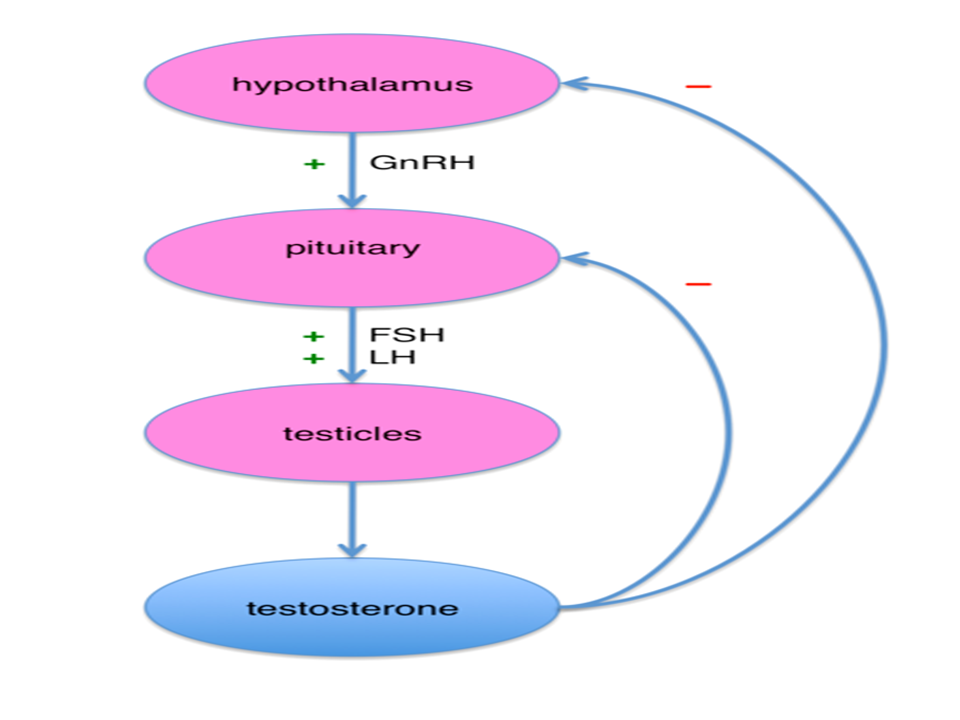
Testosterone  replacement therapy and anabolic steroids can lead to  HPTA (Hypothalamic-Pituitary-Testicular Axis- shown in figure below) dysfunction.  Supplemental testosterone can inhibit the release of the body’s own testosterone production through negative feedback inhibition on LH levels. This feedback inhibition also results in suppression of FSH levels, leading to suppression of sperm production (spermatogenesis).


Not all studies show a shutdown of the HPTA in patients after testosterone cessation. In a study previously mentioned in the Moodiness section, Dr. Rabkin compiled data for 42 patients who were treated with testosterone for 12 weeks and then randomized (double blind) to receive placebo injections for six weeks. At week 13 (one week after their first placebo injection and three weeks since the last active injection), mean testosterone level was 286 ng/dL. At week 15 (after 2 placebo injections), mean testosterone level was 301, and after week 17 (after 3 placebo injections), mean serum level was 324 ng/dL. None of these values was statistically different from the mean baseline testosterone level of 308 ng/dL. These data suggest that for men who were already hypogonadal there was no further decline in the body’s production of testosterone once testosterone therapy was discontinued after 12 weeks of use. It is not known if longer term testosterone use would have the same results.

When high-dose testosterone use (as in bodybuilding) is discontinued the HPTA dysfunction that occurs when it is stopped may be a lot more pronounced.  Stopping treatment may cause the patient to suffer all the symptoms of hypogonadism for weeks or months.  Many lose a lot of the muscle mass they gained through their cycle of anabolics plus testosterone. In some cases a specific medical protocol is required for HPTA normalization. If you go to bodybuilding sites, you will see Clomid and HCG mentioned a lot for this purpose.

There is no controlled data from studies using any protocols to accelerate the normalization of normal testosterone production in men who have used either supplemented physiologic (normal) or supraphysiologic (above normal) doses of testosterone for long periods.

For men who had normal testosterone before starting testosterone or anabolic steroids (athletes, bodybuilders or certain people with wasting syndrome) and who want or need to stop those compounds, some physicians have attempted to jump-start testicular testosterone production using a combination of products that have different effects on the HPTA and estrogen receptors. One such physician is Dr. Michael Scally from Houston (read the interview with him: Click here ) who presented a poster at the Lipodystrophy and Adverse Reactions in HIV conference in San Diego in 2002 that reported the use of a protocol to normalize testosterone production in HIV-positive patients after prolonged anabolic steroid and testosterone use for their wasting syndrome.

The protocol consisted of the use of HCG, clomiphene citrate, and tamoxifen (read about each of these products in their respective sections). Treatment takes place over two discrete intervals. The first treatment interval is to initiate the restoration of gonadal function. The second interval is to restore the hormonal pathways among the hypothalamus, the pituitary and the gonads. The medications are initiated simultaneously after cessation of androgens when it is expected that the body would try to start to slowly make its own testosterone. If the testosterone ester (cypionate, enanthate, undecanoate, Sustanon) that the patient used is known (the most common one in the United States is depo testosterone or testosterone cypionate), its half-life in the body can be estimated so that the date to begin the medical protocol can be predicted with some accuracy to assess a time when no pharmaceutical testosterone remains in the body.

The protocol for HPTA normalization contains: 
       First 15 days:

  HCG 2,500 IU (subcutaneous) once every other day; 
Clomiphene citrate 50 mg orally twice a day; and
Tamoxifen 20 mg orally once a day.

A satisfactory testosterone level on day 15, typically 350 ng/mL or greater, is followed by the oral medications (no HCG) for an additional
15 days.

This protocol has not been tested in many patients but has shown good results in restoring HPTA in a month. I know that this sounds like a long time but without treatment the body’s restoration process would take about the same length of time that somebody was using androgens.  In some, HPGA function and testosterone production never returns to normal. Hopefully we will see data on approaches like this one used in patients who need to stop testosterone or anabolics after long term use. However, no such studies are listed in clinicaltrials.gov.

Most doctors will refuse to prescribe the protocol above since they are not familiar with it. But remember that this protocol will likely not help most men who had low testosterone before starting TRT anyway.  It is more likely to be helpful to those who used testosterone and anabolics for muscle building purposes and who were not hypogonadal before starting their muscle building cycles.

More information

Saturday, May 12, 2012

Testosterone Therapy Helps Obese Men Lose Weight


Results of a study were presented at the 2012 European Congress on Obesity in Lyon , France  by Dr Bradley Anawalt, M.D. from The Endocrine Society and the University of Washington Medical Center, Seattle that followed 251 obese men aged 38 to 83 with low testosterone levels. Among these men, 214 were followed for two years and 115 were followed for five years.
The men were given 1,000 milligrams of testosterone by injection when the study started, again at six weeks and then every 12 weeks until the end of the trial. The product used was Nebido (possible upcoming name in the US: Aveed)
The men who were followed for five years lost an average of 35 pounds. Their average body-mass index — a measurement that takes height and weight into account — dropped from 34 to 29, moving them from the obese category into the overweight category. In addition, they also saw improvements in their cholesterol and triglyceride levels, along with their blood pressure.
In addition, there was no increase in the risk of prostate cancer, researchers noted.
Prior studies in conditions like HIV have shown testosterone replacement to decrease fat mass and increase lean body mass.
Testosterone replacement also increases energy levels, so men can exercise more frequently.


Friday, May 4, 2012

How to Avoid Getting Man Boobs


From the book: Testosterone: A Man's Guide


Avoiding Enlarged Breast (Gynecomastia)


Yes, I am talking about breast appearance in men, not women. Gynecomastia is a benign enlargement of the male breast resulting from a growth of the glandular tissue of the breast. It is defined clinically by the presence of a rubbery or firm mass extending concentrically from the nipples. Men who start experiencing this problem complain of pain and tenderness around the nipple area. Gynecomastia is caused by higher than normal blood levels of estradiol, a metabolite of estrogen. As discussed earlier in the book, testosterone can convert into estradiol, DHT, and other metabolites. Men with higher amounts of the enzyme aromatase usually have this problem even at lower doses of testosterone. Growth of this glandular tissue is influenced by a higher fat percentage, older age, excessive alcohol intake, and the use of certain medications. Gynecomastia usually occurs early in testosterone replacement in those who experience this side effect.

In several studies on testosterone replacement, only a very small percentage of people receiving testosterone experience growth of breast tissue. In one HIV-specific study conducted by Dr. Judith Rabkin in New York, she reported that out of 150 men enrolled in the study, two men experienced this adverse reaction. Gynecomastia is much more common among those who use high testosterone doses, such as bodybuilders (they call this "gyno" or "bitch-tits").
How do you manage gynecomastia if it does occur? Lowering the testosterone dose had not proven helpful for the two patients in Dr. Rabkin’s study. The use of antiestrogens, such as tamoxifen 10 mg twice daily, with lower doses of testosterone has been effective. Gynecomastia can become permanent if the condition lasts very long although it may reduce in size when the androgen use is discontinued. In the absence of resolution, surgical correction may be necessary in severe cases.

For men who experience enlarged breast size, doctors usually check estradiol levels to determine whether too much testosterone is being converted into estrogen. I do not believe that routine measurement of estrogen is needed for men who have no symptoms of high estrogen (mainly breast tissue enlargement and water retention). For those who have higher than normal estrogen, doctors usually prescribe an antiestrogen medication. One such regimen is anastrozole at 1 mg/day during the first week until nipple soreness and breast enlargement disappear. The dose is then lowered to 0.25 mg a day, or 1 mg twice a week.

A warning: Bringing estrogen down to very low levels could cause health problems in men in the long run. Hair/skin quality and health, brain function, bone density, and other important factors may be greatly influenced by estrogen. However a 12-week study in men using anastrozole at 1 mg a day and 1 mg twice a week found no changes in bone metabolism markers.

The normal production ratio of testosterone to estrogen is approximately 100:1. The normal ratio of testosterone to estrogen in the circulation is approximately 300:1. Estrogen (measured as estradiol) should be kept at 30 picograms per milliliter (pg/mL) or lower. As men grow older or as they gain a lot of fat mass, their estrogen blood levels increase, even to levels higher than that of postmenopausal women.

Medications and Products That Can Cause Gynecomastia
A number of medications have been reported in the medical literature to cause gynecomastia due to decreases in testosterone, increases in estradiol, or both. These include:
  • Antiandrogens. These include cyproterone, flutamide, and finasteride.used to treat prostate cancer and some other conditions.
  • HIV medications. Sustiva, Atripla, and Videx have been associated with gynecomastia.
  • Anti-anxiety medications such as diazepam (Valium).
  • Tricyclic antidepressants. These include amitriptyline.
  • Glucocorticoid steroids.
  • Antibiotics.
  • Ulcer medication such as cimetidine (Tagamet).
  • Cancer treatment (chemotherapy).
  • Heart medications such as digitalis and calcium channel blockers.
  • Anabolic steroids
Substances that have been reported to cause gynecomastia include:
  • Alcohol
  • Amphetamines
  • Marijuana
  • Heroin
  • Soy and flaxseed- There are conflicting studies but it is something to keep in mind
  • Exposure to pesticides and byproducts of plastic processing has also been linked to increased estrogen and decreased sperm count in men.
For more information on anastrozole pricing by prescription, fill out this form: Click Here

Register in our new forum site